



Israeli planning authorities are poised to advance a massive settlement project this week, a move critics warn could provide a final, physical blow to the possibility of a contiguous Palestinian state. The project envisions 9,000 new housing units on the site of the abandoned Qalandiya airport in northern East Jerusalem.
The District Planning and Building Committee is scheduled to discuss and likely approve the outlines for the Atarot neighborhood on Wednesday. According to the Israeli advocacy group Peace Now, the plan is not merely a housing project but a strategic maneuver. By placing an Israeli enclave in a densely populated Palestinian urban corridor, it effectively severs the link between East Jerusalem and the West Bank.
The site is surrounded by hundreds of thousands of Palestinians living in Ramallah, Kafr Aqab, and the Qalandiya refugee camp. Peace Now described the initiative as “destructive,” arguing that it intentionally targets a key area to prevent any future sovereign Palestinian state from emerging alongside Israel.
“The massacre government is working to establish a new ultra-Orthodox mega-settlement across the Green Line,” the organization stated, referring to the administration of Prime Minister Benjamin Netanyahu. They noted that the project sits in the heart of what would have been the territory of a future Palestinian state.
The bureaucratic journey for the Atarot plan has been long. While it gained momentum in 2020, it faced domestic environmental objections and diplomatic pressure from previous United States administrations. However, the current government appears determined to push through legal and environmental hurdles to begin the tender process for contractors.
Most of the designated land has been classified as “state land” by Israeli authorities. This classification allows the government to bypass the need for permission from local Palestinian landowners, many of whom have lived in the surrounding districts for generations.
This acceleration of settlement activity comes amidst a broader backdrop of regional crisis. While international attention remains fixed on the devastating war in Gaza—where officials report more than 70,000 people have been killed since October 2023—the situation in the West Bank has reached a boiling point.
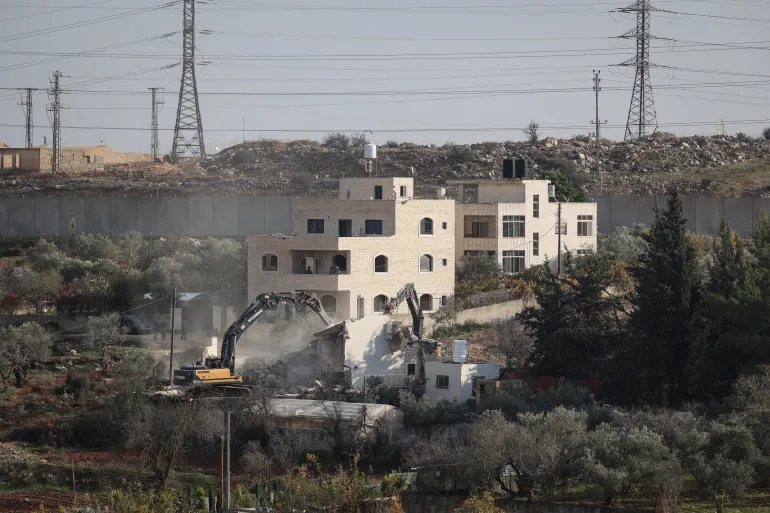
On Wednesday morning, Israeli forces began demolishing Palestinian homes in the town of Biddu, northwest of Jerusalem, citing a lack of building permits. In the Nur Shams refugee camp, residents are bracing for the planned demolition of 25 residential buildings later this week, a move local leaders call collective punishment.
The physical construction is often preceded by civilian friction. In the village of Ein Yabrud near Ramallah, settlers reportedly burned Palestinian vehicles and painted racist slogans on walls. Such incidents, often occurring under the gaze of the military, have become a grim feature of daily life in the occupied territories.
For many observers, the Atarot plan is reminiscent of the E1 settlement project, which faced years of international condemnation for its potential to split the West Bank in two. Now, as the planning committee meets in Jerusalem, the window for a negotiated two-state solution appears to be closing tighter than ever before.

