



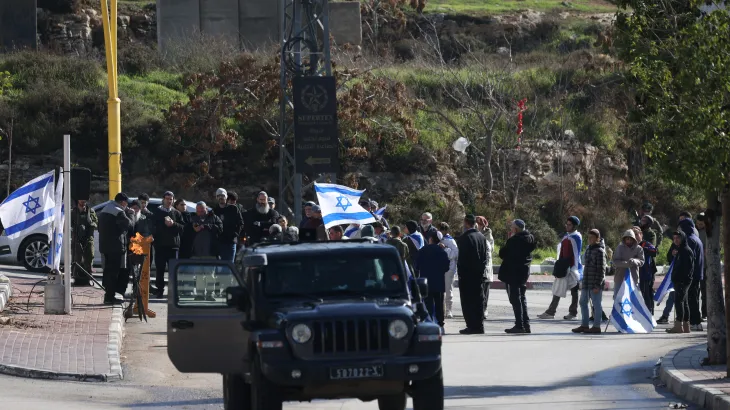
The landscape of the occupied West Bank is undergoing a radical and rapid transformation as the Israeli government moves to formalize 19 illegal settlement outposts. This latest wave of approvals signals an aggressive push toward de facto annexation, leaving Palestinian communities increasingly fragmented and isolated behind a growing network of fences and military gates.
Finance Minister Bezalel Smotrich, a key architect of the policy, has been vocal about the strategic intent behind these moves. During a recent ceremony, Smotrich stated that the government is advancing “sovereignty on the ground” specifically to block the future establishment of a Palestinian state.
While outposts are traditionally established by small groups of ideological settlers without initial state permits, they rarely lack state support. These outposts—now being upgraded to official settlements—often serve as the “fingers” of a larger expansionist hand, reaching into areas of the West Bank that previously saw little settlement activity.
The formalization process is far from a mere bureaucratic hurdle. It unlocks a floodgate of government funding, infrastructure development, and military protection. For Palestinians living nearby, it often marks the beginning of an era of restricted movement and the loss of grazing or agricultural land.
The human cost of this territorial push is stark. The Israeli human rights group B’Tselem reports that settler violence—often carried out under the watchful eye of the Israeli military—has forcibly displaced 44 Palestinian communities over the last two years.
These attacks, ranging from arson to deadly shootings, have claimed the lives of 34 Palestinians, including children. Despite the severity of the violence, human rights organizations note that perpetrators are almost never brought to justice. National Security Minister Itamar Ben-Gvir, himself a settler, has been accused of further weakening the policing of these extremist groups.
Beyond the settlements themselves, a massive system of military infrastructure is strangling Palestinian life. The Israeli army has installed nearly 1,000 gates across the West Bank, effectively turning villages and towns into “open-air prisons.”
This physical isolation is coupled with a devastating economic downturn. The UN Conference on Trade and Development recently estimated that Israeli policies have effectively erased 69 years of Palestinian development, shrinking the GDP to levels not seen since 2010.
In refugee camps like Jenin and Nur Shams, the destruction is even more visible. Roughly 32,000 people have been displaced as the Israeli military maintains a presence in these camps, damaging or demolishing over 1,400 buildings in the past year alone.
While U.S. President Donald Trump has stated he would not allow formal annexation, the Israeli government appears undeterred. Prime Minister Benjamin Netanyahu recently described his expansionist vision as a “historic and spiritual mission,” rooted in the concept of a “Greater Israel.”
UN Secretary-General Antonio Guterres has warned that this record-breaking expansion violates international law and erodes the fundamental rights of the Palestinian people. As the outposts become towns and the gates continue to lock, the possibility of a contiguous Palestinian territory continues to fade.

