



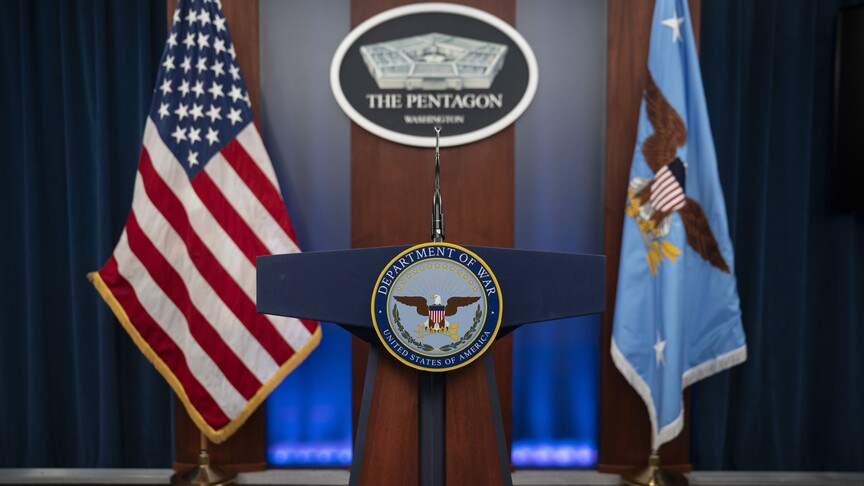
The Pentagon has privately cautioned several European capitals that their shipments of advanced weaponry may face significant delays, as the ongoing conflict with Iran rapidly exhausts American stockpiles. According to reports surfaced by the Financial Times on Friday, the strain on U.S. manufacturing is forcing a difficult reassessment of global military priorities.
High-level defense officials reportedly delivered the warning to key allies, including the United Kingdom, Poland, and the Baltic states of Lithuania and Estonia. At the heart of the issue is the high expenditure rate of precision munitions in the Middle East, which has left the United States scrambling to balance current combat needs with long-standing delivery contracts.
The delays are expected to hit critical hardware hardest, specifically the High Mobility Artillery Rocket Systems (HIMARS) and National Advanced Surface-to-Air Missile Systems (NASAMS). Both systems have become cornerstones of modern defense for dozens of nations, spanning from Taiwan and Australia to Norway and Ukraine.
Nine sources familiar with the discussions indicated that the bottleneck isn’t just a European problem. Delays are also being weighed for partners in Asia, suggesting a systemic squeeze on the American defense industrial base. For nations on Russia’s doorstep, the news is particularly jarring, arriving four years into the grueling war in Ukraine.
The Pentagon stated it is now “carefully evaluating” both new and existing equipment requests. The goal, officials say, is to ensure that limited resources align with the most immediate “operational needs.” In practice, this means the active theater in Iran is currently consuming the lion’s share of available output.
The strategic shift has sparked blunt criticism from former insiders. Tom Wright, a former official from the Biden administration, suggested that Washington is prioritizing the Middle East and deterrence in the Indo-Pacific at the direct expense of its European partners.
“It’s more than willing to throw Europe under the bus to do that,” Wright told the FT, adding that European nations must now accelerate the rebuilding of their own defense industries at “warp speed.” The reliance on U.S. production, once seen as a guarantee of security, is now being viewed by some as a strategic vulnerability.
The ripple effects extend far beyond the Atlantic. With 14 partners currently utilizing HIMARS and an even larger number relying on NASAMS for air defense, any slowdown in the supply chain threatens to weaken regional deterrents from the Middle East to the South China Sea.
For Kyiv, the timing could hardly be worse. As Ukraine continues to plead for sustained Western support, the prospect of its primary benefactor being bogged down in a secondary, resource-heavy conflict with Iran raises uncomfortable questions about the longevity of U.S. military aid.
As the war in Iran continues to deplete reserves, the Pentagon’s warning serves as a cold reminder of the limits of American industrial capacity. For Europe, the message is clear: the era of relying on an “arsenal of democracy” with infinite bandwidth may be coming to a close.

