



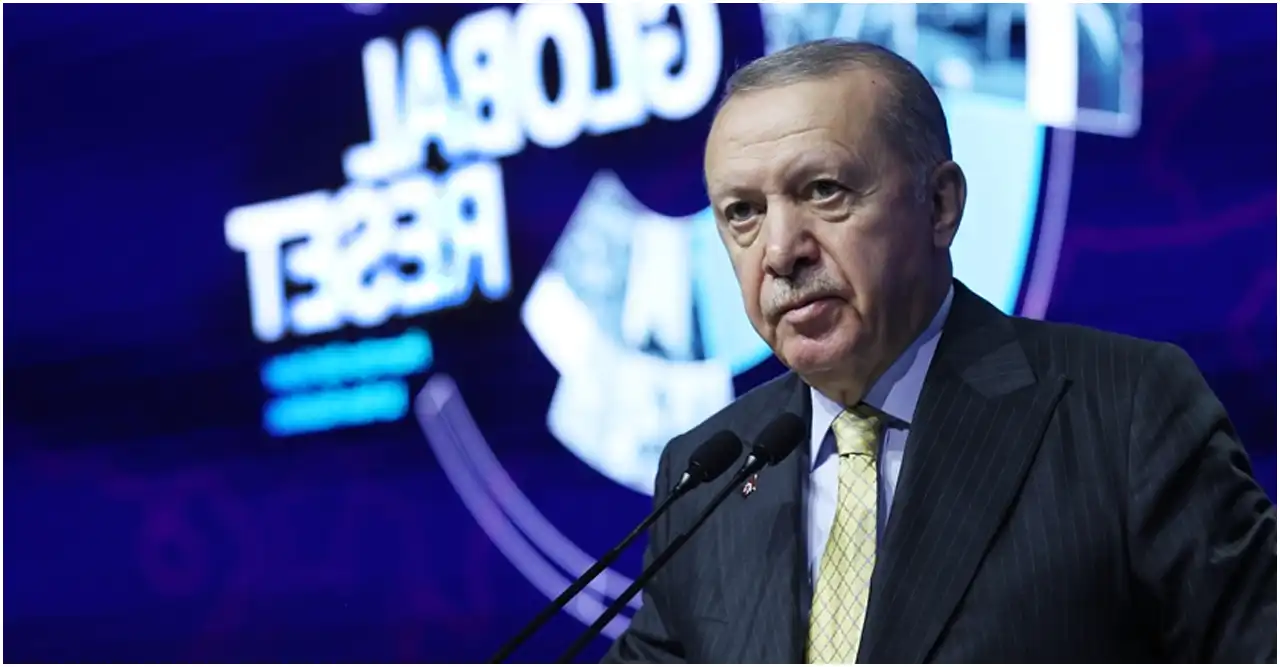
Turkish President Recep Tayyip Erdogan delivered a sharp critique of Israel on Friday, warning that the nation is actively “seeking excuses” to violate the fragile Gaza ceasefire and resume its military operations.
Speaking at the TRT World Forum in Istanbul, the president raised significant concerns over the stability of the current truce, which was intended to bring a pause to the devastating conflict.
Erdogan contrasted the positions of the two parties, asserting that while Hamas has demonstrated diligence in adhering to the agreement’s terms, Israel’s history gives cause for alarm.
“Everyone knows Israel’s terrible record when it comes to keeping its promises,” he stated during the address. The Turkish leader suggested a pattern of behavior that casts doubt on the longevity of the pause in hostilities.
Painting a stark picture of the humanitarian situation, Erdogan highlighted the widespread destruction of civilian infrastructure in Gaza. He noted that “hardly a single building remains intact,” specifically referencing the bombing of schools, mosques, churches, and hospitals.
The president also accused Israel of employing hunger “as a deadly weapon,” particularly against children, deepening the civilian plight within the besieged territory. He questioned the narrative of Israel’s innocence, pointing to its extensive military capabilities, including nuclear weapons.
Erdogan expanded his criticism to the international community and the media landscape. He lamented the failure of global institutions tasked with maintaining peace to “stop massacres, prevent genocide, and save children’s lives.”
He also paid tribute to journalists covering the conflict, stating that 270 media workers had been killed while “exposing Tel Aviv’s false propaganda” and reporting the truth from the ground amid the Israeli operations.
The Turkish president framed the conflict as a test of global conscience. He argued that despite the advancements of the “communication revolution” over the past two decades, the international community faces a moral reckoning.
“If children continue to die from Asia to Africa,” Erdogan remarked, “we all have an obligation to question ourselves.” This call for introspection was directed at the perceived paralysis of the global order.
President Erdogan’s address at the forum, a platform focused on global dialogue, also touched upon other pressing international conflicts. He offered a note of optimism regarding the war in Ukraine, which has continued to disrupt global stability.
Erdogan expressed his belief that “a middle ground will soon be found” in the conflict. He suggested this development could pave “the way for both neighboring peoples to live side by side in peace again,” underscoring Turkey’s continued diplomatic efforts to mediate the dispute.
Shifting focus to Africa, the Turkish leader also voiced strong condemnation of the violence unfolding in Sudan. He specifically highlighted the situation in El Fasher, the capital of North Darfur, condemning the “atrocities committed against civilians” in the war-torn region.
The president’s remarks in Istanbul underscore Turkey’s deepening rift with Israel and its increasingly vocal role as a critic of the ongoing military campaign in Gaza. As the fragile ceasefire holds, the international community remains watchful of the diplomatic tensions and the dire humanitarian situation on the ground.

