



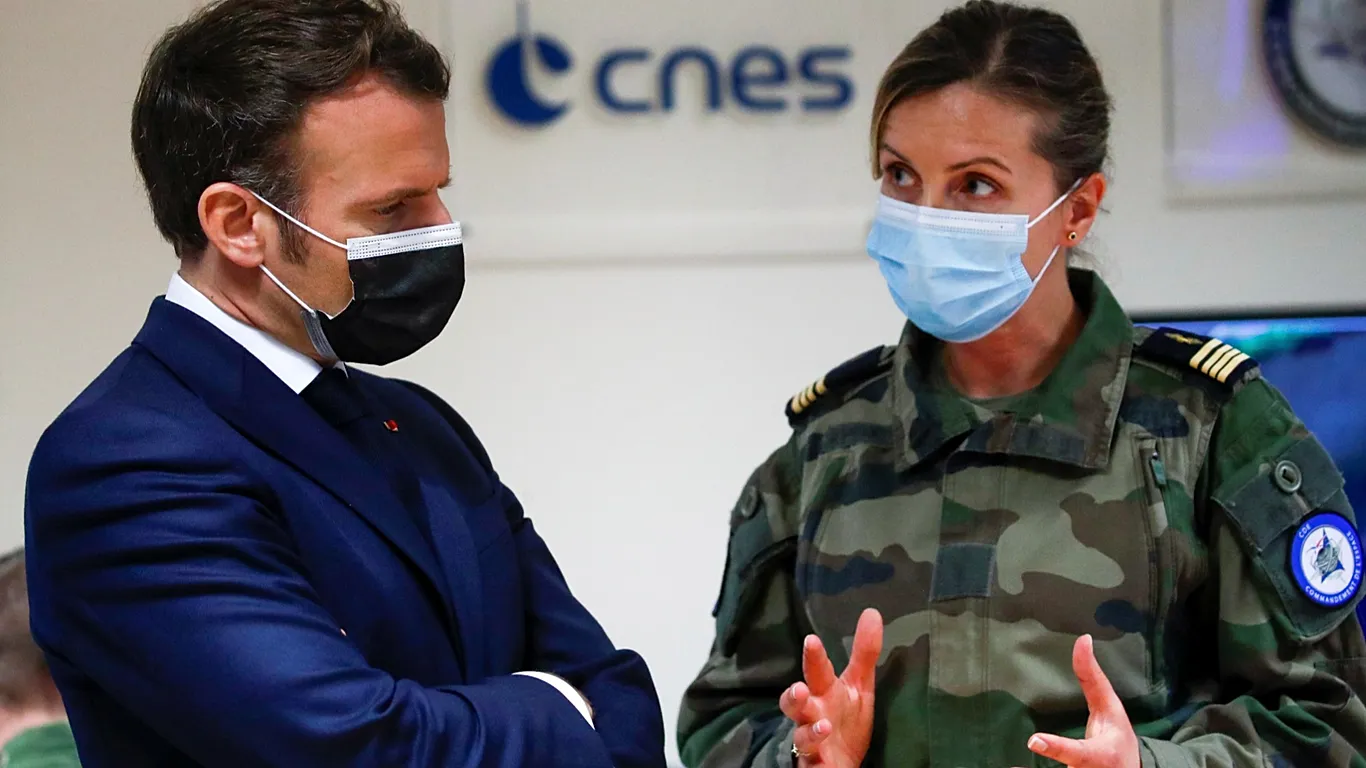
French President Emmanuel Macron is set to unveil a new national space strategy, declaring that the orbital domain has ceased to be a peaceful environment and that France and Europe must be ready to defend their interests there. The announcement, confirming a decisive shift towards space as a critical element of global security, is scheduled for Wednesday in Toulouse, the hub of France’s aerospace industry.
“Space is no longer a peaceful place,” the Elysée Palace stated ahead of the visit. The presidential office cited the increased number of satellites and “extremely aggressive challenges” from competitors, specifically naming Russia, as drivers of an increasingly intense conflict zone.
France plans to significantly bolster its military assets in orbit. The new strategy focuses on the development of lasers, electromagnetic jammers, and patrol satellites. These countermeasures are designed to counter increasingly common “aggressive behaviours.”
These behaviors include competitors using close-moving satellites to spy on French assets, employing jamming or blinding capabilities, and deploying weapons that can be fired from the ground or placed in orbit to damage national assets.
In a striking revelation, the Elysée also highlighted the “threat posed by Russia,” including the purported deployment of nuclear weapons into orbit under a program allegedly codenamed Sputnik S.
To counter these threats, France is developing surveillance and patrol satellites intended to be operational by 2027. The presidential palace likened these to “small fighter jets” capable of maneuvering close to unfriendly space assets for surveillance or jamming.
Beyond modernizing national assets and facilitating investments in domestic start-ups, Macron is expected to call for greater European cooperation. Attacks on satellite networks, the French leadership warns, represent the “Achilles’ heel of modern societies” that “can paralyse entire nations.”
This push aligns with broader European initiatives. Germany, which will co-organize a global space summit with France next April, has already announced a €35 billion investment in space projects before the decade’s end, focusing on satellite constellations and “offensive capabilities.”
The European Commission is also prioritizing a European Space Shield within its Defence Readiness plan, aiming to ensure the resilience and protection of member states’ space assets. The Commission has tabled a massive €131 billion for defence and space in its next budget proposal for 2028-2034.

