



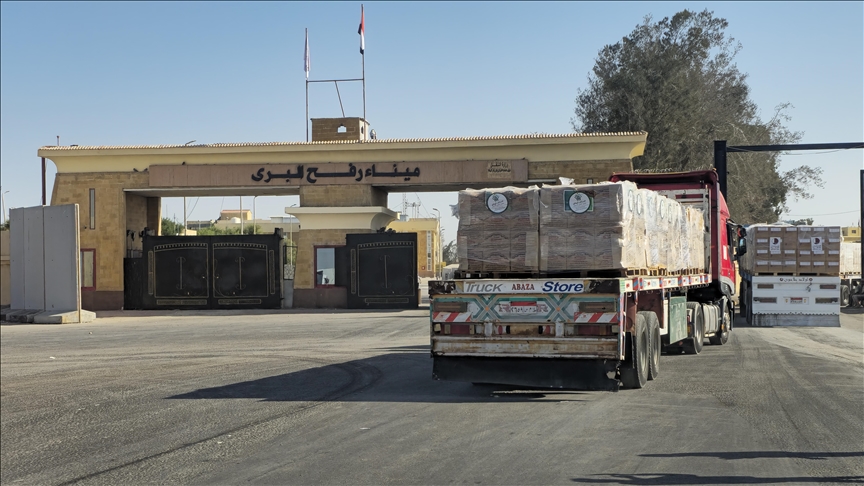
The rusted gates of the Rafah border crossing, Gaza’s primary umbilical cord to the outside world, creaked open on Sunday for a highly anticipated “pilot operation.” The move marks the first time in nearly two years that the terminal has seen official activity, signaling a fragile progression in the regional ceasefire.
While the Sunday opening served as a technical trial run, Israeli media and defense officials expect the actual flow of people to begin on Monday. Under the current trial, approximately 150 Palestinians are expected to leave the enclave daily, while around 50 will be permitted to return.
The reopening is a central component of the second phase of a U.S.-brokered ceasefire agreement. Progress on the terminal had remained frozen for months, with Israeli Prime Minister Benjamin Netanyahu insisting that no movement would occur until the remains of the final Israeli captive in Gaza were recovered. That condition was met earlier this week.
Security at the terminal will be managed through a complex, multi-layered arrangement. While Palestinian Authority-affiliated staff will handle passport stamping on the ground, Israel will maintain remote oversight through advanced surveillance equipment. European Union monitors are also set to return to the site to ensure compliance with international standards.
“Today’s opening is a pilot to test and assess the operation of the crossing,” stated COGAT, the Israeli defense body overseeing Palestinian civilian affairs. The agency clarified that for now, the corridor is open for “movement of people only,” with commercial goods remaining barred.
The human stakes of the reopening are immense. Gaza’s health ministry reports that over 20,000 wounded or critically ill patients are currently awaiting medical evacuation. For them, the crossing is not just a political milestone but a literal lifeline.
Despite the diplomatic breakthrough, the atmosphere remains tense. Recent days have seen sporadic violence and airstrikes that have tested the durability of the October ceasefire. Critics argue that the daily cap of 150 travelers is a “drop in the bucket” compared to the thousands of displaced families and students stranded on both sides of the border.
The pilot phase is also expected to facilitate the entry of the National Committee for the Administration of Gaza (NCAG), a technocratic body tasked with the territory’s governance. This committee is a cornerstone of the broader “Board of Peace” initiative promoted by the Trump administration to oversee reconstruction.
As the first buses prepare to move on Monday, the eyes of the international community are fixed on this narrow strip of land. Whether Rafah remains open depends entirely on the stability of the broader truce and the success of this initial, cautious trial.

