



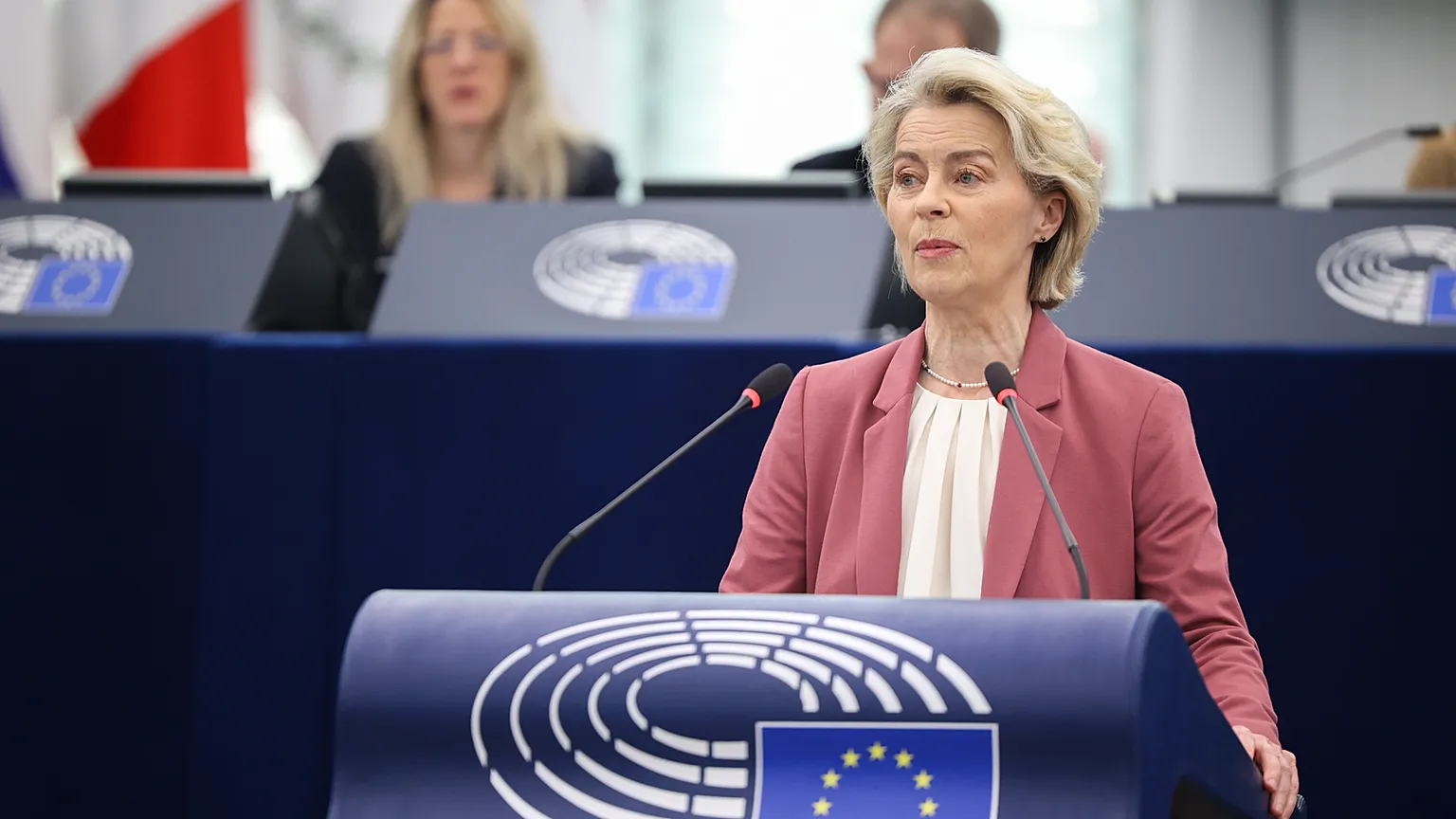
European Commission President Ursula von der Leyen issued a stark warning on Wednesday, describing a rapidly changing global landscape as a “world of predators” where the long-standing post-war peace has effectively evaporated.
Speaking to the European Parliament on the eve of a pivotal summit in Brussels, von der Leyen urged the bloc’s 27 leaders to shed their nostalgia. she framed the upcoming talks not just as a routine policy debate, but as a fight for the continent’s strategic independence and security.
The stakes for the Thursday gathering are exceptionally high. Leaders face two existential puzzles that have long divided the union: how to bankroll a beleaguered Ukraine for the coming years and whether to finally ratify a controversial trade deal with the South American Mercosur bloc.
On the issue of Ukraine, the financial clock is ticking toward a projected 135-billion-euro shortfall. Von der Leyen’s initial plan to use a “reparations loan” backed by frozen Russian state assets has hit a wall of skepticism from Belgium, where the bulk of those assets are held.
In a notable shift of tone during her Wednesday address, the Commission chief appeared to soften her stance. She signaled a willingness to explore alternative funding routes, including the possibility of issuing joint EU debt, a move that suggests a desperate race to secure an agreement before Kyiv’s funds dry up in April.
Simultaneously, the ghost of the 25-year-old Mercosur trade agreement continues to haunt the halls of power. While von der Leyen views the deal as a vital bridge to the global south, France is leading a fierce domestic charge to block it, citing a “mortal threat” to European agriculture.
Italy has emerged as the unlikely kingmaker in this trade saga. Prime Minister Giorgia Meloni has kept her cards close to her chest, leaving the deal’s proponents in a state of high-stakes suspense that could determine the EU’s future credibility as a global trade partner.
This internal friction is playing out against an increasingly hostile backdrop across the Atlantic. The second Trump administration has recently sharpened its rhetoric, with a formal national security strategy characterizing Europe as a continent in “civilisational decline” and “decay.”
Washington has also escalated its offensive against Brussels’ digital regulations. U.S. Trade Representative Jamieson Greer recently accused the EU of “harassing lawsuits” against American tech giants, threatening retaliatory fees on European service companies if the regulatory “blackmail” continues.
Von der Leyen, however, remained defiant. She told MEPs that Europe cannot afford to let the worldviews of others define its future. Her message was clear: in a changing world order, the assumption that Europe is a fading power is an outdated realization that the bloc must now disprove.
As leaders prepare for what some are calling a “make-or-break” weekend in Brussels, the central question remains whether the 27 nations can find a common voice. Without a unified front, the bloc risks becoming a mere bystander in the very world order it helped build.

