



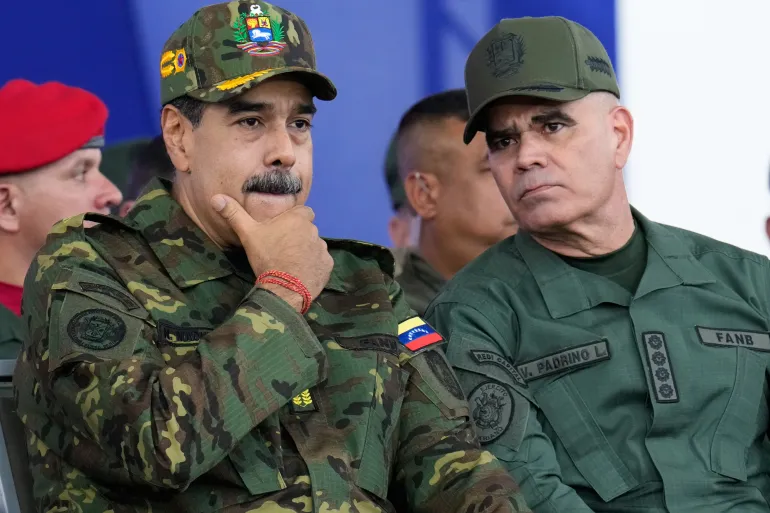
Venezuelan President Nicolas Maduro has formally called upon the Organization of the Petroleum Exporting Countries (OPEC) to intervene against what he terms “growing and illegal threats” from the United States and President Donald Trump. Caracas claims the escalating US actions are explicitly aimed at seizing the South American nation’s vast oil reserves.
In a letter sent to fellow OPEC members on Sunday, Maduro leveled a stark accusation. He alleged that the US is actively attempting to “seize” Venezuela’s oil, which are the world’s largest known deposits.
The leader pressed the oil bloc to exercise its influence. “I hope to count on your best efforts to help stop this aggression,” Maduro wrote, according to a copy released by state broadcaster TeleSUR. He warned that the intensifying threat “seriously threatens the balance of the international energy market,” impacting both oil-producing and consuming nations globally.
Maduro did not stop there; he also filed a formal denouncement with both OPEC and the wider OPEC+ group. He specifically cited the “use of lethal military force against the country’s territory, people and institutions.”
Venezuela, a founding OPEC member since 1960 alongside nations like Saudi Arabia and Iran, holds approximately 303 billion barrels of proven reserves. Despite this colossal figure, its crude oil exports were valued at a modest $4.05 billion in 2023.
This low output, relative to its reserves, is primarily a consequence of severe US sanctions imposed during the first Trump presidency.
Maduro’s diplomatic offensive follows a provocative statement made by President Trump just a day prior. On his Truth Social platform, Trump unilaterally declared Venezuelan airspace “closed in its entirety.” He directed this message at “Airlines, Pilots, Drug Dealers, and Human Traffickers,” offering no further explanation.
Caracas quickly condemned the statement, labeling it a “colonialist threat.” For months, the Maduro government has insisted that the significant US military buildup in the Caribbean region is a calculated move to gain control over Venezuela’s oil and gas reserves. The White House, conversely, maintains its focus is on disrupting drug trafficking operations.
Critics, however, point to Washington’s own data, which suggests Venezuela is not a major origin point for narcotics entering the US.
The US military presence includes major assets like the world’s largest aircraft carrier, the USS Gerald R. Ford, several warships, thousands of troops, and F-35 fighter jets.
In this context of heightened tension, at least 83 individuals have been killed in US strikes against vessels alleged by Trump to be carrying drugs. Human rights groups have vehemently criticized these attacks, calling them extrajudicial killings that violate fundamental international law.
The escalating confrontation stands in sharp contrast to the broader global energy discussion. While Trump promises a massive domestic oil production ramp-up with a return to a “drill, baby drill” policy—recently announcing new plans for drilling off the California and Florida coasts—Caribbean island nations are pleading with fossil-fuel-dependent countries to transition to clean energy. These islands are on the front lines, struggling to cope with increasingly frequent and severe climate-change-driven tropical storms.

