



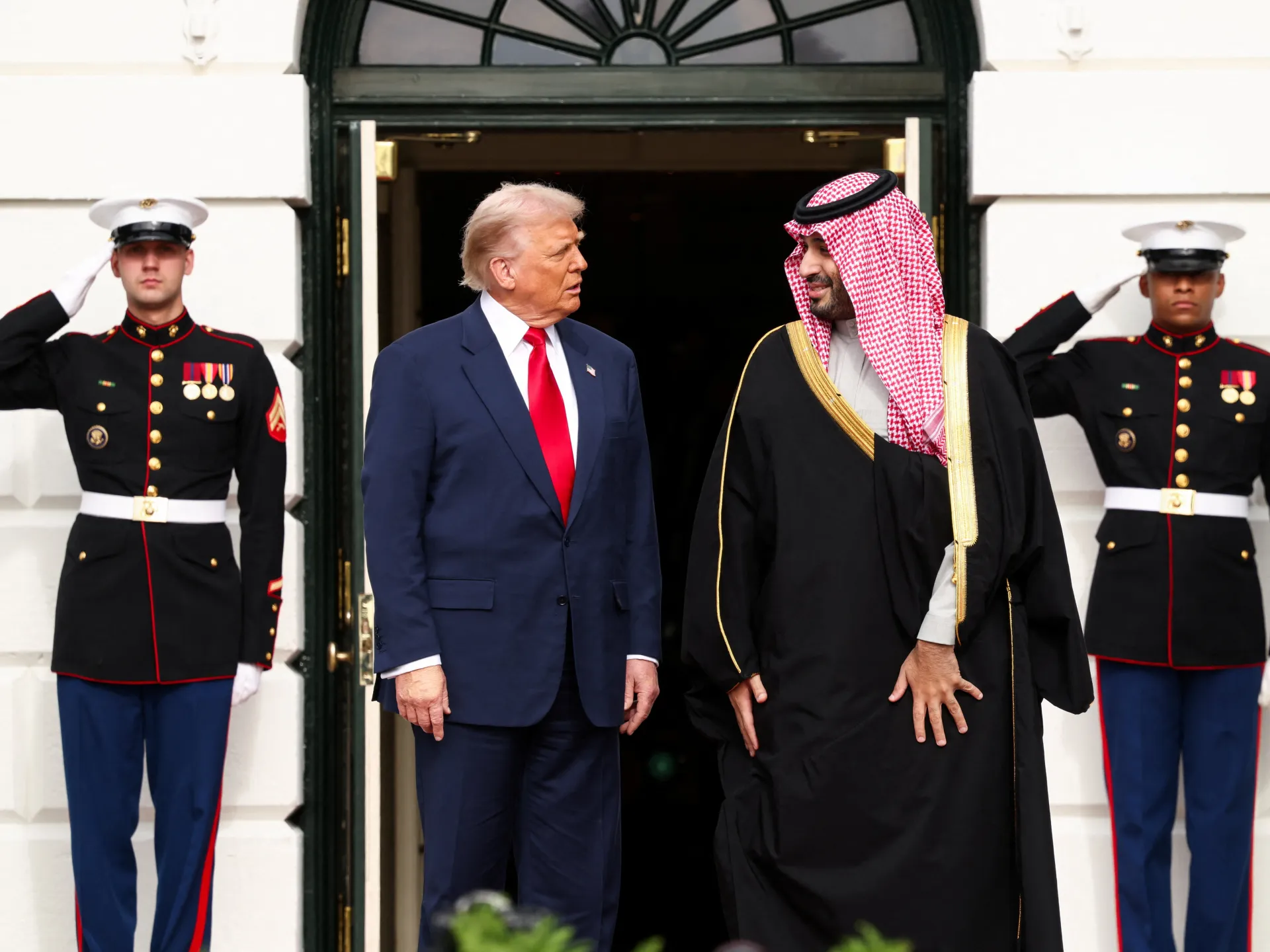
US President Donald Trump has formally designated Saudi Arabia as a major non-NATO ally (MNNA) of the United States, announcing the elevation of military cooperation during a high-profile visit by Saudi Crown Prince Mohammed bin Salman (MBS) to Washington, DC. The designation was made public during a formal dinner at the White House on Tuesday evening.
President Trump hailed the move as taking US-Saudi military cooperation to “even greater heights,” noting the importance of the MNNA status to the Kingdom. The designation grants the US partner significant military and economic privileges, including preferential access to US weaponry and joint defence projects, though it does not confer a mutual security commitment.
Alongside the designation, the two nations signed a “historic strategic defence agreement,” according to President Trump. A White House fact sheet confirmed that this pact “fortifies deterrence across the Middle East,” streamlines operations for US defence firms in Saudi Arabia, and secures “new burden-sharing funds from Saudi Arabia to defray US costs.” The leaders also concluded agreements covering civil nuclear cooperation, artificial intelligence, and critical minerals.
In a significant arms package, the White House announced that President Trump had approved future deliveries of F-35 fighter jets to Saudi Arabia. The Kingdom, which has reportedly requested to purchase 48 of the advanced stealth aircraft, also agreed to buy 300 American tanks.
The potential sale of the F-35 Lightning II stealth fighter jets to Riyadh marks the first US sale of the advanced aircraft to any country in the Middle East besides Israel. The move is viewed as a major policy shift that could fundamentally alter the military balance of power in the region. US law mandates that Israel must maintain a “qualitative military edge” (QME) over its neighbours.
When questioned about the F-35 deal’s impact on Israel’s QME, President Trump acknowledged that Israel would prefer that Riyadh receive warplanes of “reduced calibre.” However, he dismissed concerns, stating that both Israel and Saudi Arabia—which he called “great allies”—should receive “top of the line” equipment. Al Jazeera’s correspondent Alan Fisher reported that the Israeli government and lobbyists had attempted to block the sale.
The F-35 procurement is part of a broader investment pledge by Crown Prince Mohammed, which is expected to total nearly $1 trillion in US-related investment, with $142 billion allocated for the procurement of the F-35 fighter jets.
The two countries also signed a joint declaration confirming the completion of negotiations on civil nuclear energy cooperation, which the White House stated would build the legal foundation for a long-term partnership built on strong non-proliferation standards.
The issue of Saudi normalization with Israel was also discussed. Israeli officials had previously signaled they might not oppose the F-35 deal if Saudi Arabia agreed to normalize relations under the Abraham Accords. Crown Prince Mohammed, however, reiterated his long-standing position.
“We want to be part of the Abraham Accords,” Prince Mohammed said, “but we want also to be sure that we secure a clear path of a two-state solution.” He affirmed that work would continue to ensure this political prerequisite is met to advance normalization as soon as possible. The agreements, according to analysts, aim to create a political reset in the Middle East by deepening economic and defence ties.

