



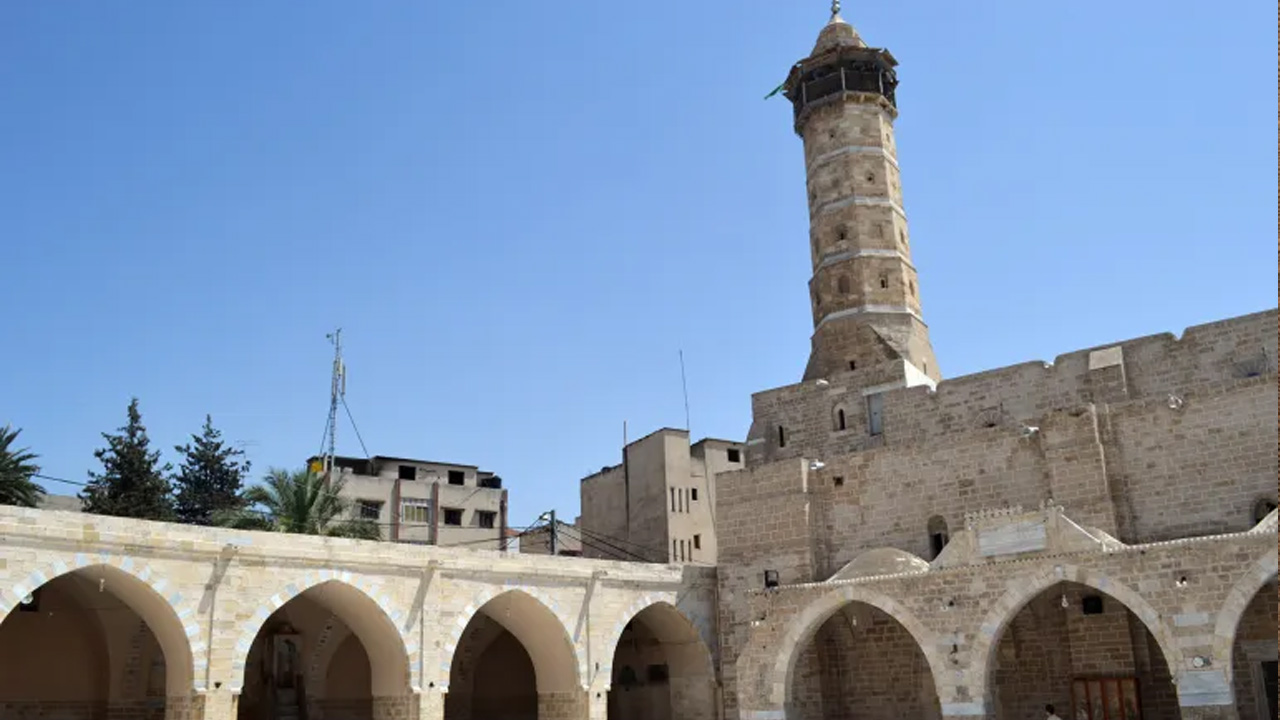
For the first time in over two years, the call to prayer (Adhan) echoed through the ancient stones of the Great Omari Mosque on Friday, signaling a moment of profound emotional and spiritual reclamation for the people of Gaza. The mosque, a centerpiece of Palestinian heritage, had been silenced by extensive damage during the ongoing conflict, but its doors swung open this week to welcome thousands of worshippers for the inaugural Jumu’ah prayer.
The atmosphere was thick with tears and prayers as the community gathered within the partially restored walls. For the residents of Gaza’s Old City, the reopening is more than just the restoration of a building; it is the revival of the city’s soul. Despite the visible scars on its minarets and facade, the mosque’s reopening represents a defiant stand against the erasure of Palestinian cultural and religious identity.
The Omari Mosque is not merely a place of worship; it is a living chronicle of the region’s complex past. According to Sheikh Tariq Hania, an official from the Ministry of Endowments (Awqaf) who oversaw the restoration, the site has transitioned through at least six major historical epochs. Originally a pagan temple, it was later converted into a Byzantine church before being established as a mosque during the caliphate of Umar ibn al-Khattab in the 7th century.
Throughout the centuries, the structure has survived the Crusades, Mongol invasions, and numerous earthquakes. “This mosque has seen empires rise and fall,” one worshipper noted. “It existed long before the modern occupation, and its stones prove our deep roots in this land.”
The recent restoration efforts focused on stabilizing the roof and walls, which had been crippled by shelling. While the “gritty” reality of the surrounding destruction remains, the interior of the mosque offered a rare sanctuary of peace.
For Gazans, the Omari Mosque is the pulse of their social and religious life, particularly during Ramadan. Its reopening at the turn of the year is seen by many as a symbolic message of hope. “Rebuilding this mosque is a blessed initiative,” said a local resident. “It is an inseparable part of our cultural fabric. It reminds us of who we are when everything else is being taken away.”
The Friday sermon emphasized resilience, urging the congregation to remain steadfast. Journalists on the scene captured images of hundreds of hands raised in supplication, a collective display of faith amidst the ruins of the Old City.
The reopening of the Great Omari Mosque sends a clear signal to the international community: while infrastructure can be damaged, the spiritual life of Gaza remains inextinguishable. As the city continues to navigate the hardships of siege and conflict, the ancient mosque stands once again as a lighthouse of endurance.

